
When a factory manager searches for a “wire mesh production line,” they’re rarely looking for a single machine. They’re picturing a whole workflow — raw wire coming in on one end, finished, stacked mesh panels going out on the other. Understanding what actually makes up that line helps you plan your production floor, budget correctly, and avoid buying equipment that can’t talk to the rest of your process.
At XINGFEI, we build every stage of that line. Here’s how the pieces fit together — and if you want to go deeper on wire and mesh manufacturing technology generally, The Wire Association International is a great industry resource.
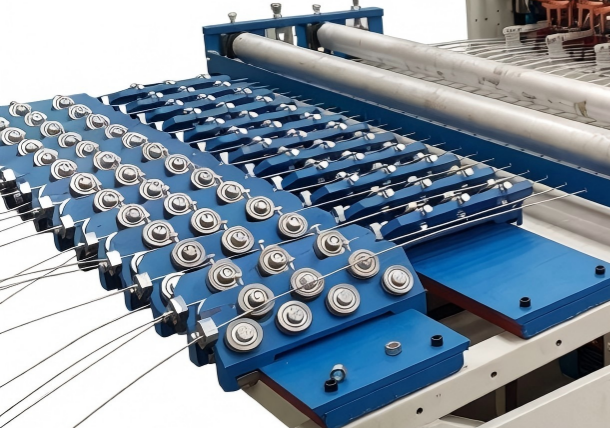
Stage 1: Wire Feeding and Straightening
Every mesh production line starts the same way: raw coiled wire has to be uncoiled, straightened, and fed into the welding section at a consistent tension. Skip this step or get it wrong, and every downstream process — welding accuracy, mesh flatness, cutting precision — suffers.
This is the stage most customers underestimate. A welding machine is only as good as the wire feed system in front of it.
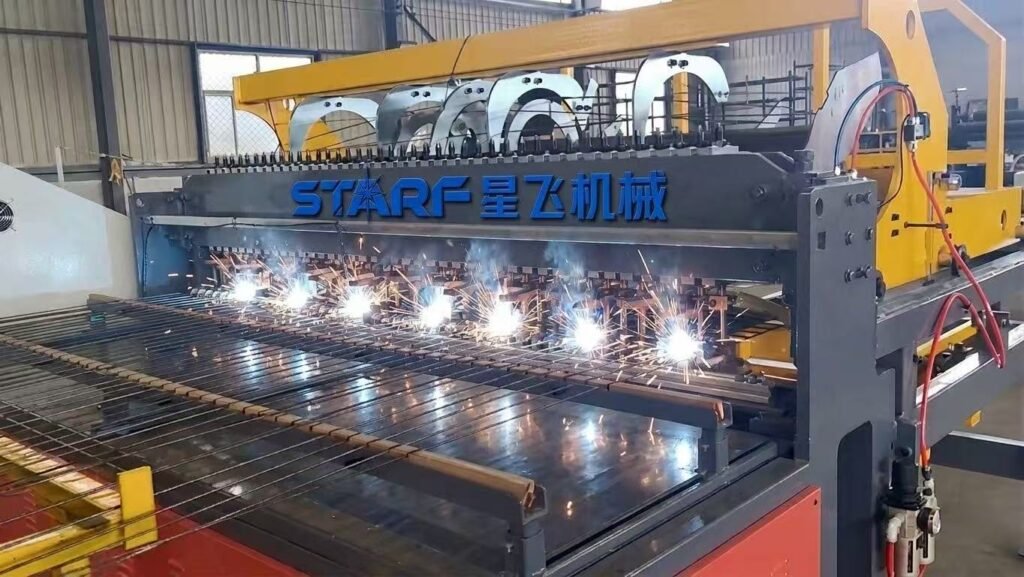
Stage 2: Welding
This is the heart of the line, and it’s where product choice depends heavily on what you’re actually making:
- General construction and building mesh — our Construction Mesh Welding Machine handles roll and panel mesh for flooring, pathways, and general fabrication.
- Concrete reinforcement — for heavier-gauge structural mesh, the Concrete Reinforcement Mesh Welding Line and Automatic Reinforcing Mesh Welding Line are built for high-output rebar mesh production.
- Fencing and security panels — the Fence Mesh Welding Machine covers standard rigid fence panels, while the Full-Auto 3D Fence Welding Production Line adds the curved, ribbed panel shape common in commercial perimeter fencing.
- High-security perimeter protection — for sites that need an extra deterrent layer, our Anti-Climb Fence Mesh Welding Line produces the tight-aperture mesh used around prisons, substations, and critical infrastructure.
- Agricultural and livestock mesh — the Chicken Cage Mesh Welding Machine is purpose-built for poultry cages, rabbit hutches, and quail enclosures, with adjustable mesh sizes for different animals.
- Industrial and mining applications — the Mining Support Mesh Welding Machine produces heavy-duty mesh for underground roadway reinforcement, and the Wire Mesh Cable Tray Welding Machine is dedicated to cable management tray production for electrical and data infrastructure projects.
Stage 3: Cutting and Forming
Once mesh is welded, it needs to be cut to length, and in some cases formed into a specific shape — bent into a 3D panel profile, curved for a cable tray, or trimmed to an exact cage dimension. This is where automation really pays off: manual cutting introduces inconsistency that shows up as wasted material and rejected panels downstream.
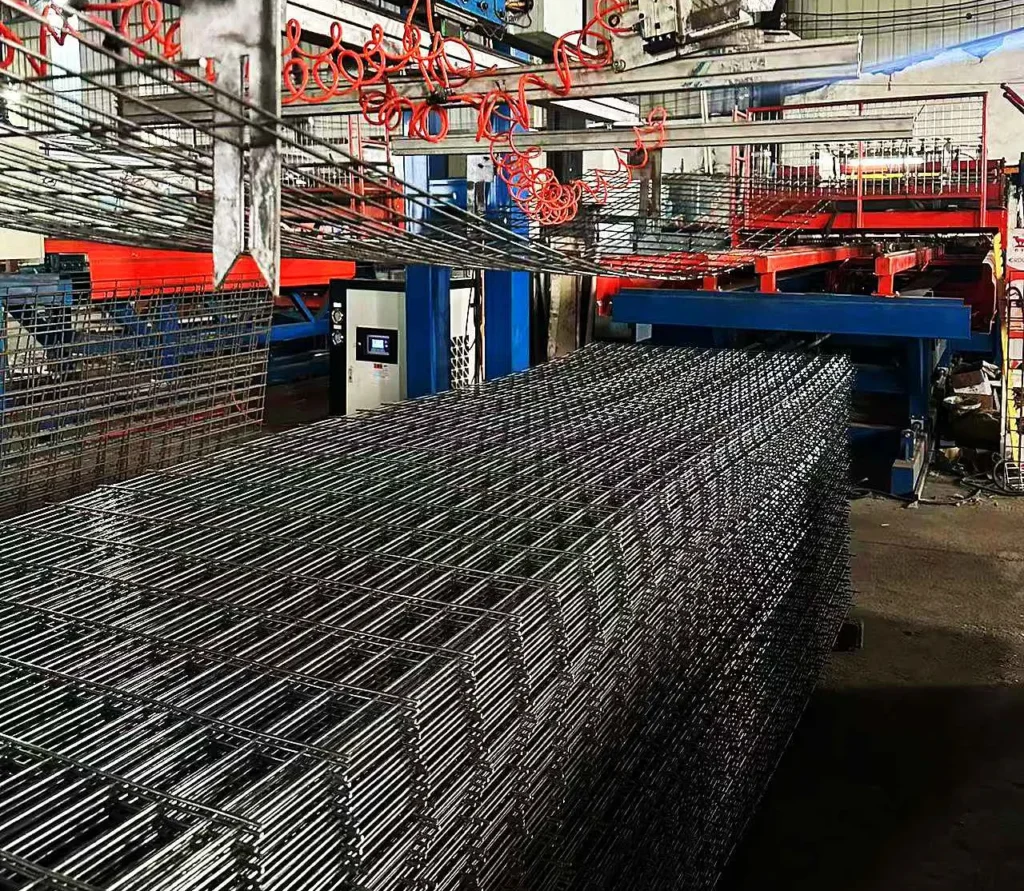
Stage 4: Stacking and Packing
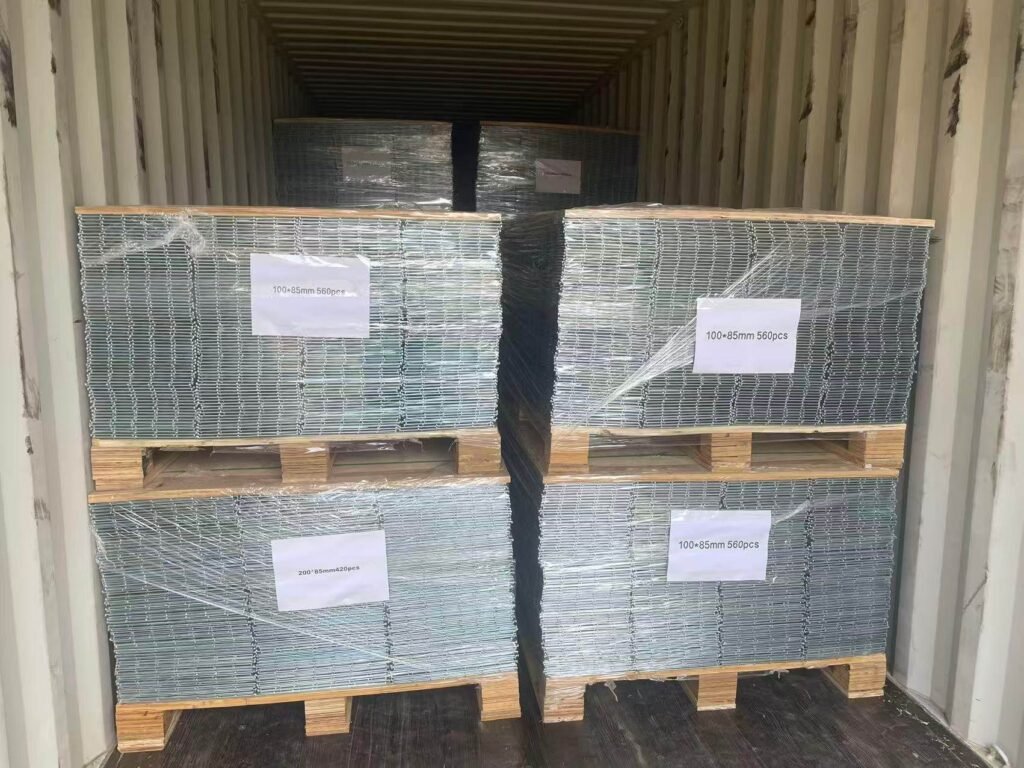
The last stage is often overlooked in planning, but it matters just as much for throughput. Automatic stacking keeps panels aligned and undamaged, and integrated packing reduces labor and shipping prep time — especially important for export orders where panels need to survive a long transit.
Why Think in Terms of a “Line,” Not a Machine
A single welding machine can absolutely get you started. But if you’re scaling production, exporting, or supplying multiple industries, the bottleneck usually isn’t the welder — it’s everything around it. A production line designed to work together, from wire feed to packing, is what actually determines your daily output and your cost per panel.
That’s the thinking behind how we design equipment at XINGFEI: every machine is built to slot into a larger line, not just stand alone in a factory corner.
Which Wire Mesh Production Line Setup Fits Your Product?
If you’re not sure which combination of equipment matches what you’re producing — whether that’s reinforcement mesh, fencing, cage mesh, or something more specialized — get in touch with our team for a configuration tailored to your output targets and budget.
For readers who want to stay current on wire and mesh manufacturing trends more broadly, Wire Journal International is a leading monthly publication covering the global wire and cable industry.