
Not every fence is made on the same machine. A standard garden fence panel, a high-security prison fence and a 3D bent panel for a perimeter wall each need a different setup. Before you compare prices, it helps to know which of the fence welding machine types fits the product you plan to sell.
This guide compares the three fence welding lines we build at Xingfei Machinery: the standard fence mesh welding machine, the anti-climb line and the full-auto 3D fence line. All three use resistance welding to fuse every wire crossing, so the real differences are wire size, spacing, panel width and how much of the process is automated.
Fence Welding Machine Types at a Glance
Here is how the three lines compare, using the reference configurations on our product pages.
| Feature | Fence Mesh Welding Machine (GWC-B) | Anti-Climb Line (XFW-3000) | Full-Auto 3D Line (XFW-2500 / 3000) |
|---|---|---|---|
| Best for | Rigid 2D fence panels | High-security anti-climb mesh | 3D (V-shaped) fence panels |
| Wire diameter | 3.0–5.0 mm | 3–6 mm | 3–6 mm |
| Panel width | 1200 / 1600 / 2100 / 2500 / 3000 mm | 3000 mm | 2500 / 3000 mm |
| Panel length | Up to 6000 mm, customizable | 6000 mm | 3000 mm |
| Line-wire spacing | 50–200 mm | 50 mm and above | 50 mm fixed |
| Cross-wire spacing | 50 mm and above | 12.7 mm and above | 50–200 mm |
| Welding speed | 60–80 cycles/min | 60–80 cycles/min | Up to 80 cycles/min |
| Bending included | No (separate bending stage) | No | Yes, automatic |
One welding cycle completes one row of cross wires, so a higher cycles-per-minute figure means faster panel production.
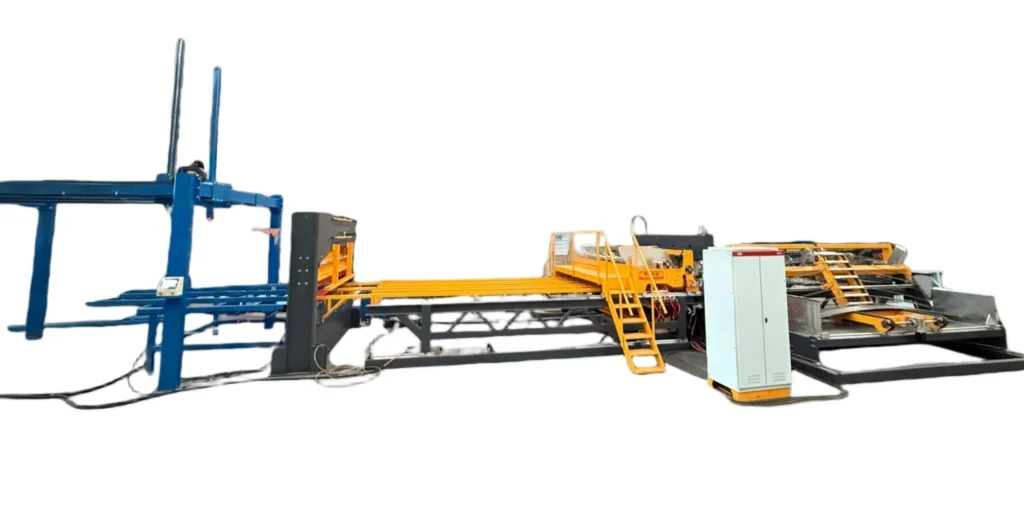
Type 1: Standard 2D Panels (Fence Mesh Welding Machine)
The Fence Mesh Welding Machine (GWC-B series) is the all-round choice for rigid fence panels, perimeter barriers and architectural welded mesh. It feeds longitudinal wire from support frames, places pre-cut cross wire automatically, welds every intersection and advances the finished panel with a servo pulling carriage.
Mesh spacing and panel size are saved as recipes on the touchscreen, so repeat orders do not need to be set up again. Five panel widths are available, from 1200 mm to 3000 mm, and it works with both black annealed and galvanized wire. Diagonal tolerance is ±2 mm per 2 m, which keeps panels square for installation.
This is also the starting point for 3D fence. Finished 2D panels can go to cutting, stacking or a separate bending stage if you want to make 3D panels in a second step.
Type 2: Anti-Climb Security Mesh (Fence Welding Line)
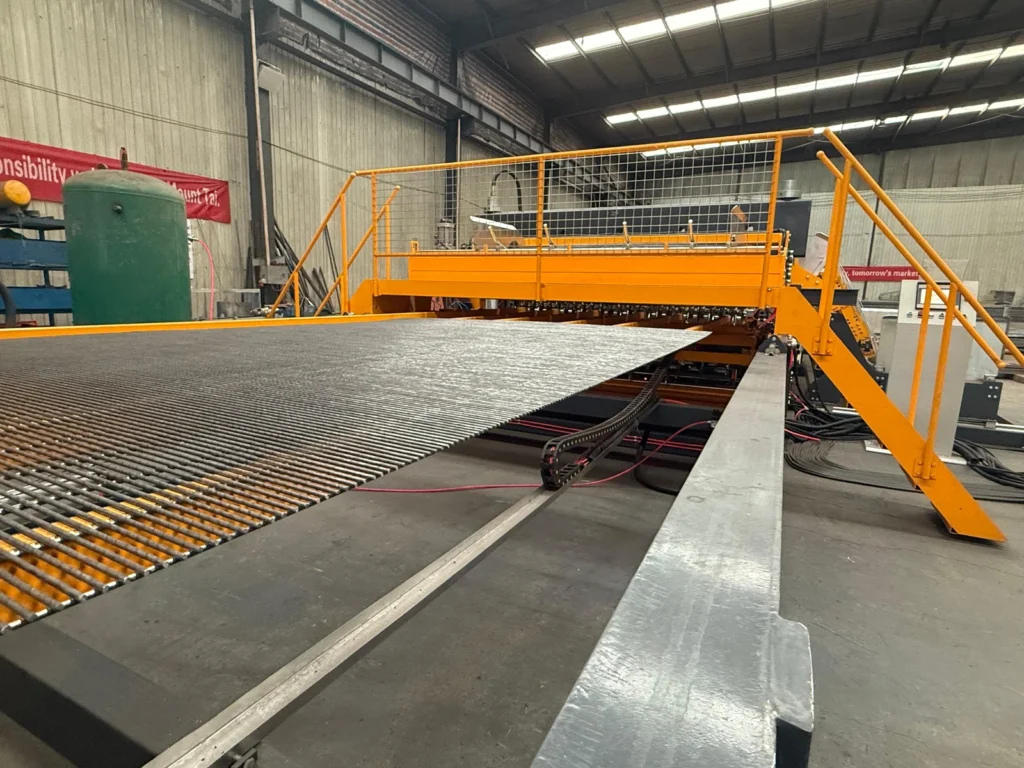
Security fences use a much tighter mesh so that hands and feet cannot get a grip. The Anti-Climb Fence Mesh Welding Line (XFW-3000) is built for exactly this: cross-wire spacing can go down to 12.7 mm, with 61 welding points across a 3000 mm width.
Dense mesh needs a lot of welding energy at once, so the line uses sixteen 125 KVA transformers to keep weld strength consistent. Pre-cut wire feeding and a PLC touchscreen with fault alarms keep the process steady. It is designed for prison, airport and other high-security perimeter panels.
Because these buyers often want proof before they invest, we offer factory sample production and remote trial-run verification on this line.
Type 3: 3D Fence Panels (Full-Auto Production Line)
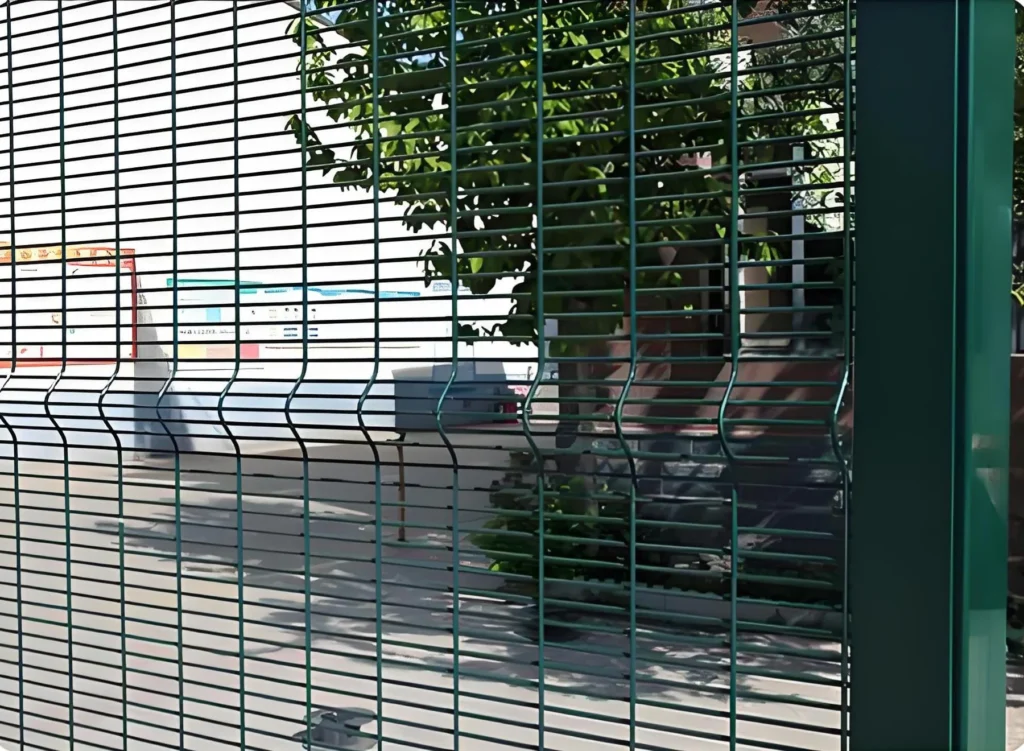
3D fence panels are welded flat and then bent into a V-shape, which adds stiffness without adding wire. Doing that by hand between two machines wastes time and adds handling errors. The Full-Auto 3D Fence Welding Production Line joins the steps: pre-cut wire feeding, welding, servo pulling and automatic bending, all synchronized by the PLC.
It is configured for 2500 mm or 3000 mm panels (XFW-2500 and XFW-3000), welds at up to 80 cycles per minute and uses 125 KVA transformer banks matched to the line width. Stacking and handling equipment is optional if you want a continuous production flow.
How to Choose Between the Fence Welding Machine Types
Start with the fence you actually sell, then work backwards. These five questions usually decide it:
1. What is your final product? Standard 2D panels point to the GWC-B machine. High-security mesh points to the anti-climb line. V-shaped 3D panels point to the 3D line.
2. What wire and mesh opening do you need? Check your wire diameter and spacing against the ranges above. If your requirement is just outside a range, ask us, because configurations can be built to requirement.
3. What panel size do your customers order? Width and length decide the machine model, so list your three most common panel sizes before you ask for a quote.
4. How much do you plan to produce? If you only make a few 3D orders a month, a standard machine plus a separate bending stage may be enough. If 3D panels are your main product, the full-auto line saves labor and handling.
5. Is your factory ready? Large welding lines need adequate power supply, floor space and trained operators. Tell us your site conditions early so we can match the transformer capacity and layout.
What to Confirm Before You Order
The numbers on any product page are reference configurations. Final values are confirmed against your wire material, mesh specification, output target and factory conditions. That is why we recommend you send us your mesh drawing or technical parameters first. Our engineers will review them and give you a preliminary plan within 48 hours.
It also helps to know how a supplier supports you after delivery. Our guide to choosing a wire mesh welding machine manufacturer lists the seven questions worth asking, and our daily maintenance guide shows how to keep electrodes, air circuit and wire feed running smoothly once the line is installed.
Find the Right Fence Line for Your Production
Whether you are starting with simple 2D panels or planning a high-security or 3D fence business, the right machine is the one that matches your mesh, your panel sizes and your output target. Compare the three lines here: Fence Mesh Welding Machine, Anti-Climb Fence Mesh Welding Line and Full-Auto 3D Fence Welding Production Line.
Send us your fence drawing or target parameters through our contact page, or message us on WhatsApp at +86 15031820613. We will recommend a configuration and send a preliminary plan.