
A welding line runs thousands of cycles a day. Most breakdowns don’t come from major failures — they come from four small components wearing out quietly until the machine finally stops. Knowing what to check, and how often, is the core of daily wire mesh welding machine maintenance can prevent the vast majority of unplanned downtime on a wire mesh welding machine.
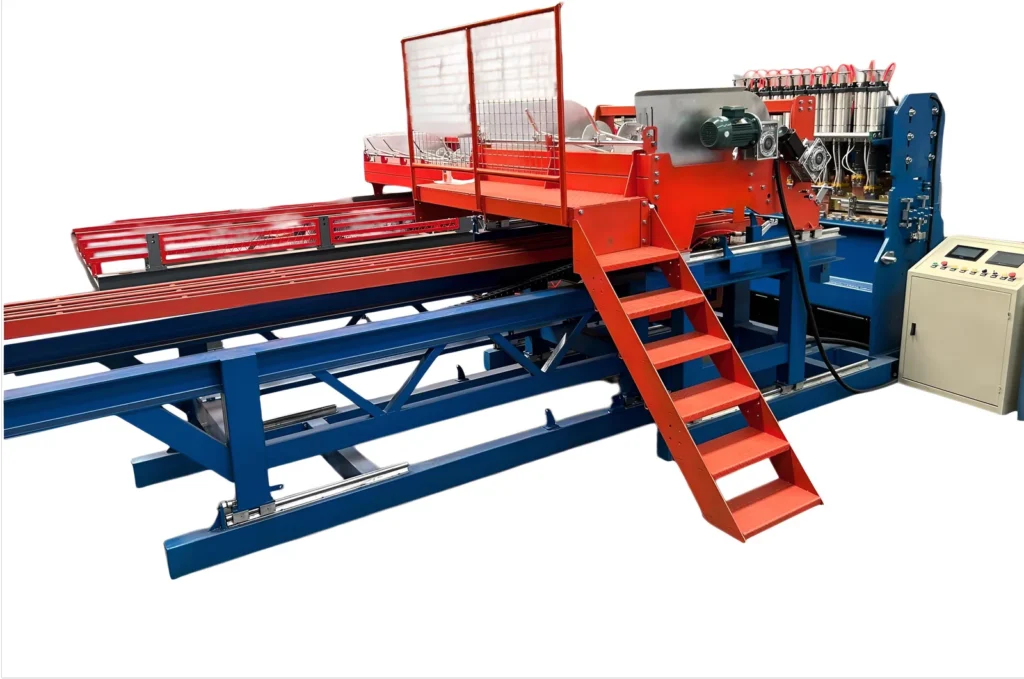
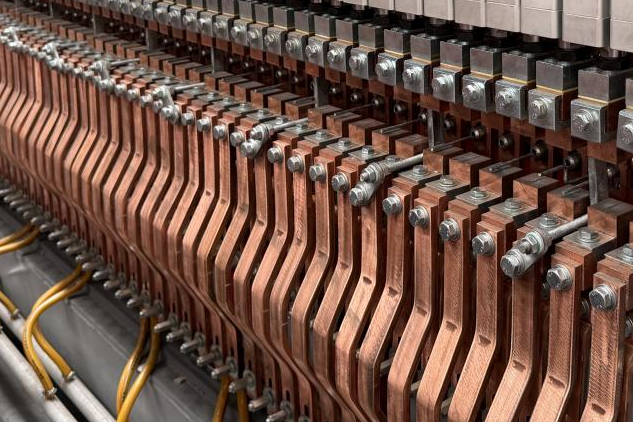
1. Copper Electrodes: The Most Common Wear Point
Symptoms: weak welds, cold joints, sudden sparking, or wire burning through at the joint.
The copper electrode makes contact with the wire tens of thousands of times a day, carrying several thousand amps of current and intense heat with every cycle. Two things typically go wrong:
- Oxidation and carbon buildup: Oil or rust on the wire surface forms a dark, insulating layer on the electrode under high heat, reducing conductivity.
- Wear and deformation: Over time, the electrode surface develops small pits or grooves, shrinking the contact area and causing the current to concentrate unevenly.
Daily maintenance: Before starting the machine each day, lightly file or sand the electrode surface until the copper shows its natural shine. If pitting has already formed, smooth it out immediately rather than waiting.
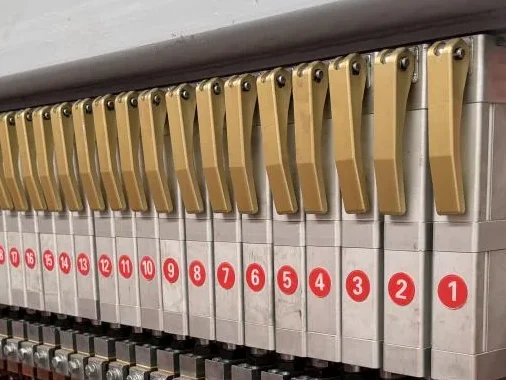
2. Air Circuit and Cylinders: The Most Common Source of Leaks
Symptoms: the electrode drops slower than normal, strikes with less force, or a specific motion stops working — often with a faint hissing sound.
Cylinders cycle dozens of times per minute, so the seals and air lines are under constant pressure and vibration. Common causes:
- Moisture in the air supply: Many factories don’t install an efficient water separator on their air compressor. Moisture entering the cylinder causes internal rust and seal wear, leading to leaks or sticking over time.
- Worn air lines: Constant machine vibration can cause air tubes to rub against the frame, wearing a small, hard-to-spot hole into the line.
Daily maintenance: Drain the air filter’s water trap at the end of each shift, and listen for faint hissing sounds when the machine is idle.
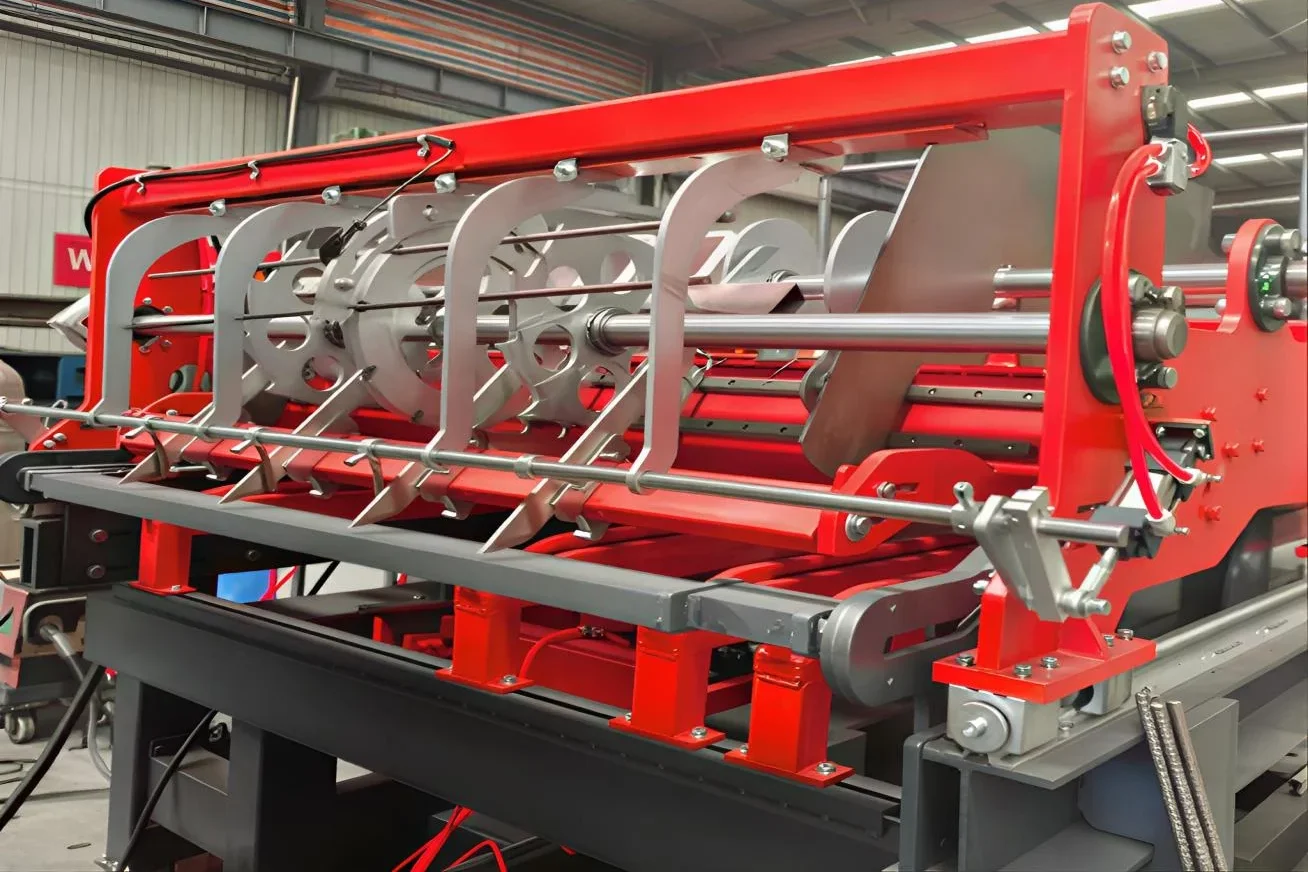
3. Wire Feed Mechanism: The Most Common Source of Jams
Symptoms: cross wires fail to drop, drop at an angle, or two wires drop at once — often stopping the machine outright.
This is a precision mechanical or pneumatic process, so it’s highly sensitive to the quality of the incoming wire. Common causes:
- Bent wire: Even a slight bow in the cross wire from the upstream straightening and cutting machine can cause it to jam in the hopper.
- Loose stop plates: Machine vibration can shift the bolts on the hopper’s length-limiting plate by as little as 1mm, which is enough to cause a jam.
Daily maintenance: Strictly inspect incoming wire quality and reject any bent wire before it reaches the hopper. Periodically check and re-tighten the hopper’s mounting bolts with a wrench.
4. Carriage Hooks and Proximity Sensors: The Most Common Cause of Positioning Errors
Symptoms: mesh spacing varies from panel to panel, the carriage overshoots and hits the end stop, or it stops mid-travel.
The carriage relies entirely on proximity sensors at each end of the track to report its position to the PLC. Common causes:
- Debris on the sensors: Welding spatter and dust can stick to the magnetic proximity sensors, causing false readings or no reading at all — leaving the PLC “blind” to the carriage’s actual position.
- Worn hooks: The small hook that grabs the finished panel wears down from constant friction with hard wire, eventually becoming too rounded to hold properly.
Daily maintenance: Wipe down the carriage track and sensor surfaces regularly to remove dust and metal filings.
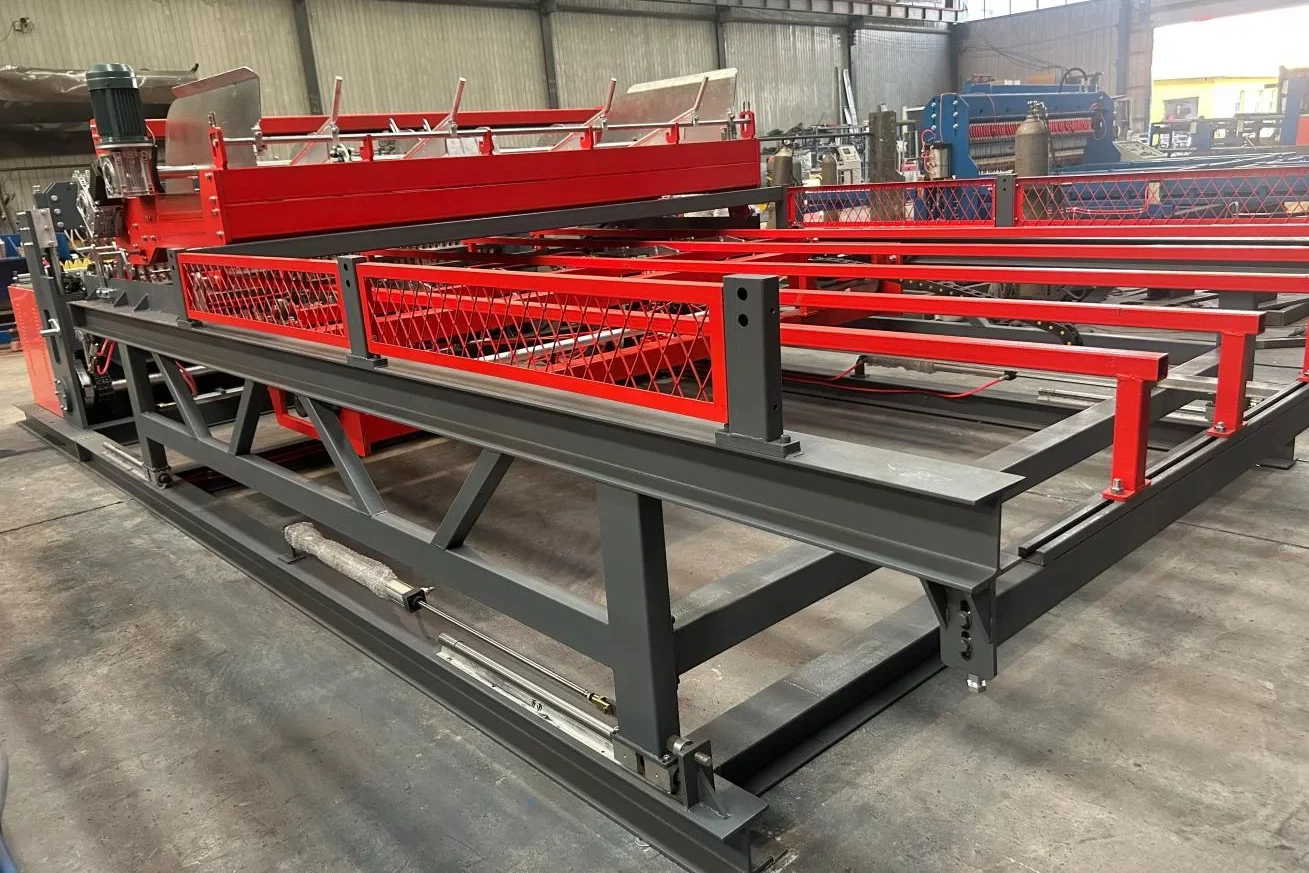
The Four-Step Daily Checklist
For new operators, these four habits cover roughly 80% of common issues:
- File — Regularly dress the copper electrodes.
- Wipe — Clean debris off sensors and oil off the track.
- Tighten — Check and re-tighten vibration-prone bolts every few days.
- Drain — Empty the air filter’s water trap daily.
Keep Your Line Running
Most of these wear parts are standard spare parts that should be kept in stock rather than ordered only after a breakdown. If you need replacement electrodes, seals, sensors, or hooks for your welding line, get in touch with your wire diameter and machine model, and we can confirm compatible parts and lead time.
These maintenance points apply across our full range of wire mesh welding lines, including the Fence Mesh Welding Machine, Anti-Climb Fence Mesh Welding Line, Full-Auto 3D Fence Welding Production Line, Automatic Reinforcing Mesh Welding Line, Concrete Reinforcement Mesh Welding Line, Construction Mesh Welding Machine, Chicken Cage Mesh Welding Machine, Mining Support Mesh Welding Machine, and Wire Mesh Cable Tray Welding Machine.
Have a specific issue you can’t diagnose? Contact us with your machine model and a description of the problem, and we’ll help you troubleshoot it.